



Handwoven carpet paintings rank among the most celebrated forms of Persian art. Indeed, they combine centuries-old weaving traditions with fine artistic expression. Unlike floor rugs, artisans craft these pieces specifically for wall display. As a result, they serve as both decorative masterpieces and cultural treasures. In this guide, therefore, we explore the main types of handwoven carpet paintings and, moreover, what to look for when buying one.
What Are Handwoven Carpet Paintings?
A handwoven carpet painting is a small-format rug that artisans create primarily for hanging on a wall. Typically, these pieces feature a much higher knot density than floor carpets. Consequently, they allow for finer detail and more precise imagery. Furthermore, every handwoven carpet painting is entirely hand-knotted. Because of this, each one becomes a unique work of art that reflects hundreds of hours of craftsmanship.
Types of Handwoven Carpet Paintings
1. Portrait Carpet Paintings
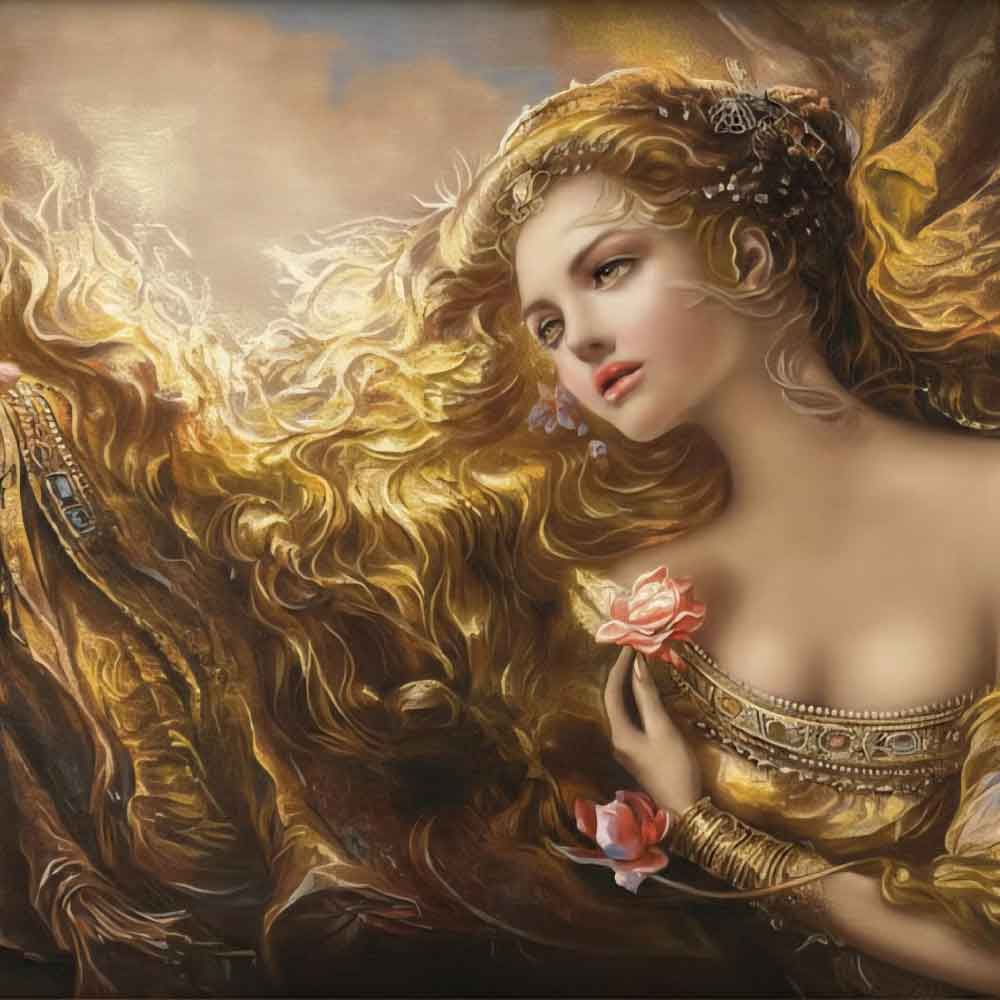
First, portrait pieces depict human faces, historical figures, or religious icons. Naturally, portrait weaving demands exceptional skill and, additionally, very high knot density to accurately capture facial features and expressions.
2. Landscape Carpet Paintings
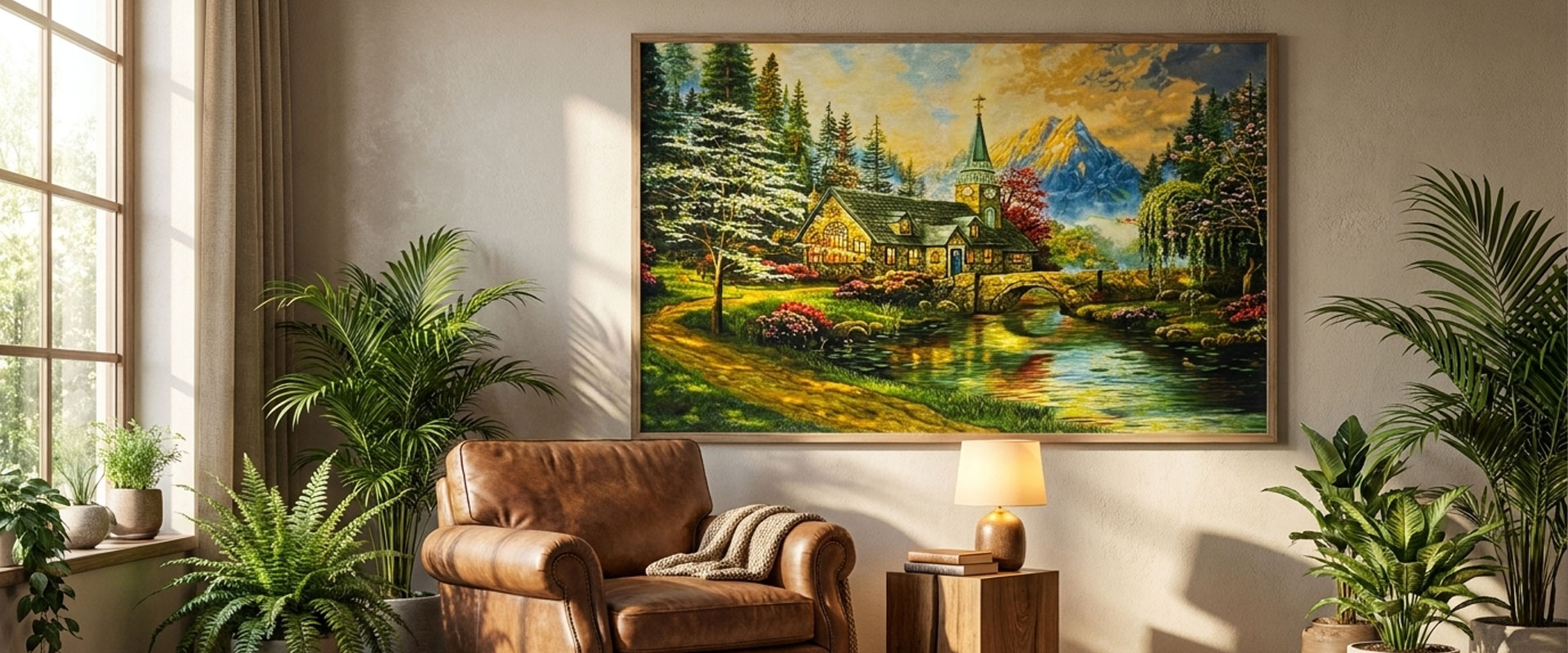
Next, landscape designs feature Persian gardens, rivers, mountains, and countryside scenes. In fact, they rank among the most popular choices. Moreover, their warm and inviting color palettes make them ideal for living rooms.
3. Animal Motif Carpet Paintings
Meanwhile, lions, horses, peacocks, and gazelles appear as iconic symbols in Persian art. These designs trace back to ancient Iranian traditions. Consequently, they bring a strong sense of heritage to any space.
4. Calligraphy & Inscription Carpet Paintings
Similarly, weavers craft pieces that feature verses by Hafez and Saadi, Quranic passages, or prayers in elegant calligraphy. As a result, the fusion of calligraphic art with weaving creates deeply meaningful, one-of-a-kind pieces.
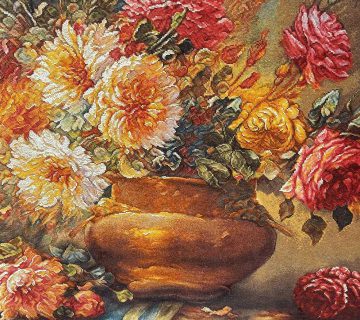
5. Floral & Islimi (Arabesque) Carpet Paintings
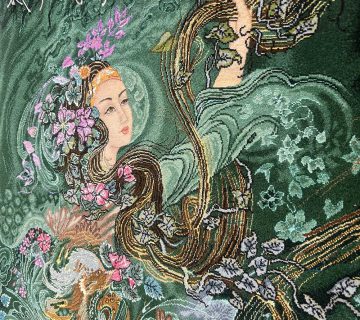
Furthermore, Islimi and Khatai patterns rank among the oldest and most authentic Persian designs. Because artisans weave them with remarkable symmetry and delicacy, they complement virtually any interior style.
6. Miniature Carpet Paintings
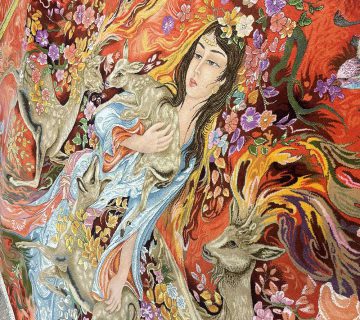
Finally, miniature pieces draw inspiration from Persian miniature painting. Specifically, they depict narrative scenes such as royal feasts, hunting scenes, and epic tales from the Shahnameh. For this reason, collectors highly prize them.
What to Look for When Buying Handwoven Carpet Paintings
- Knot Density: First and foremost, the higher the knot count, the finer the detail and the greater the value.
- Yarn Material: Additionally, natural silk offers the most luminous, luxurious finish; likewise, fine wool and kork wool provide excellent quality and durability.
- Natural Dyes: Moreover, pieces that use plant-based dyes retain their beauty and authenticity far longer.
- Region of Origin: Notably, carpet paintings from renowned weaving centers like Tabriz, Isfahan, Kashan, and Qom carry higher prestige and value.
- Quality Framing: Finally, a well-made frame hances presentation and, in addition, protects the piece from dust.
Caring for Handwoven Carpet Paintings
To preserve its colors and fibers, always keep your carpet painting away from direct sunlight and humidity. Furthermore, remove dust gently with a soft brush. However, when it comes to deep cleaning, always trust carpet care professionals instead.
Conclusion
In conclusion, handwoven carpet paintings offer a perfect blend of art, culture, and investment. By understanding the different types — from portraits and landscapes to calligraphy and miniatures — you can, therefore, choose the perfect piece to elevate your space. Ultimately, you may even add a valuable treasure to your collection.

No comment